The best kitchen remodel ideas don't start with a trend. They start with a feeling. How do you want the space to live? What does it say when someone walks in for the first time? The design style you choose sets the tone for every decision that follows, from cabinet door profiles to hardware finishes to the way light moves through the room.
Here are the kitchen design directions we work with most at Kitchens by Bell, and what makes each one work.

Transitional Kitchen Remodel Ideas -- The Timeless Kitchen
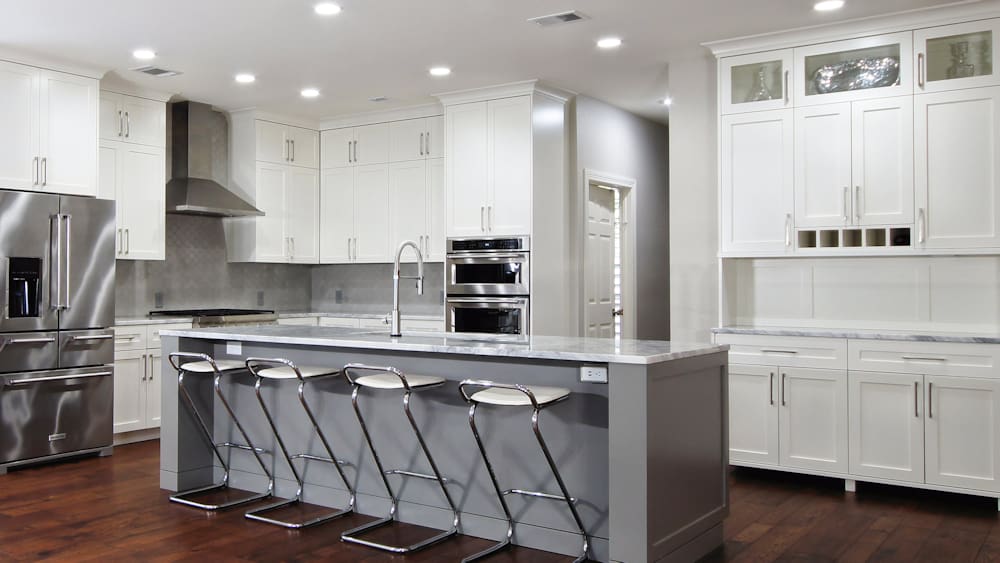
Transitional design is the most enduring choice in kitchen remodeling, and for good reason. It doesn't chase trends. It borrows the warmth and familiarity of traditional design and pairs it with the clean lines and simplified detailing of contemporary style, landing somewhere that feels both classic and current.
- Shaker-style cabinetry in painted finishes -- white, warm gray, navy, sage, or greige -- with simple recessed-panel doors that never go out of style
- Mixed metals done with intention: brushed nickel and matte black, or unlacquered brass paired with warm whites
- Natural stone or quartz countertops with movement and depth: Calacatta, Carrara-inspired quartz, or leathered quartzite
- Subway tile or handmade tile backsplash with a modern grout color or unexpected layout pattern
- Furniture-style details like legs on islands, corbels, or crown molding that give the kitchen a built-in, custom feel
Transitional kitchens photograph well, sell well, and live well. If you want a kitchen that still feels right in 20 years, this is your direction.
See how this style comes to life in our Buda Kitchen Overhaul and Circle C Update projects.
Contemporary and Modern -- Clean, Deliberate, Confident
Contemporary kitchens are built around restraint. Every element earns its place. The result is a space that feels intentional, sophisticated, and quietly impressive. Nothing extra, nothing missing.
This is the direction that rewards investment in craftsmanship most visibly. When there's no ornament to distract, the quality of the cabinet construction, the precision of the reveals, and the consistency of the finish are front and center.
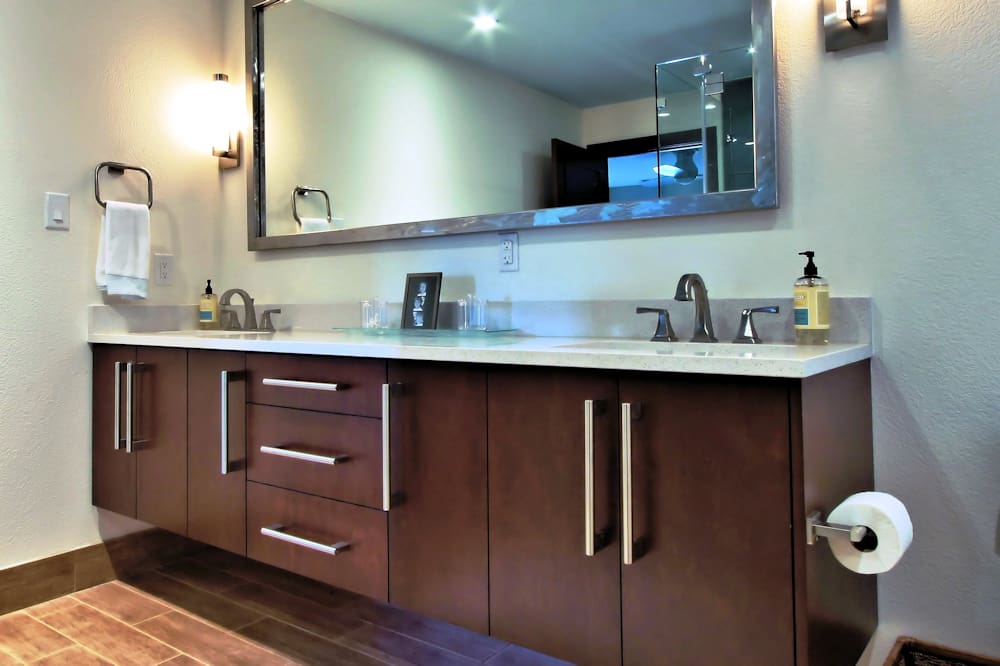
- Flat-front or slab cabinetry in high-gloss lacquer, matte paint, or wood veneer with clean faces, integrated pulls, or long linear hardware
- Waterfall islands in quartz or porcelain, where the countertop material wraps down the sides in one continuous surface
- Hidden storage solutions including pull-out pantries, appliance garages, and drawer inserts that keep surfaces clear
- Bold or monochromatic color palettes carried consistently through cabinetry and surfaces
- Handleless cabinetry with push-to-open mechanisms or recessed grip channels for a seamless, hardware-free look
Contemporary kitchens reward bold decisions. If you know what you want and you're willing to commit to it, the result is a kitchen that makes a statement every single day.
See this direction in action in our Barton Creek Modern Flair project.
European Style -- Precision Built Into Every Detail
European kitchen design takes contemporary principles further, toward integrated appliances, frameless cabinet construction, and a level of precision that's less common in American remodeling. This is the direction that gets designers excited.
Where American cabinetry uses a face frame, a structural border around the cabinet box, European frameless construction eliminates it entirely. The result is a cleaner face, wider drawer access, and a more refined overall appearance. Combined with full-overlay doors and drawers, the cabinet becomes a surface rather than a collection of parts.
- Frameless cabinet boxes with full-overlay doors and no visible face frame, giving you maximum drawer and door opening width
- Integrated appliances including refrigerators, dishwashers, and sometimes microwaves paneled to match cabinetry for a seamless built-in appearance
- Handle-free design with J-pull profiles, recessed channels, or touch-latch mechanisms
- High-gloss or matte lacquer finishes in bold, confident colors including deep navy, forest green, graphite, or warm white
- Precision reveals with consistent, intentional gaps between doors and drawers that are uniform to the millimeter
If transitional is timeless and contemporary is confident, European is precise. A kitchen built the way a fine piece of furniture is built, with craftsmanship as the point.
See European-style cabinetry at its best in our West Oak Hill and Contemporary Round Rock projects. European frameless construction follows the precision standards established by the National Kitchen and Bath Association.
Organic and Natural -- Warmth, Texture, and Material Honesty
The organic kitchen trend has moved well beyond shiplap and open shelving. What's emerging in Austin homes is a more sophisticated version, one that uses natural materials with intention, layering wood, stone, and texture in ways that feel curated rather than casual.
This direction works especially well in homes with a strong indoor-outdoor connection, or for homeowners who want the kitchen to feel warm and grounded rather than sleek and minimal.
- Wood cabinetry in natural or lightly stained finishes including rift-sawn white oak, cerused oak, or walnut with visible grain and natural variation
- Live-edge or bookmatched stone countertops and backsplashes that treat natural stone as the visual focal point rather than a background element
- Unlacquered brass or hand-forged iron hardware that develops patina over time and adds character
- Woven, ceramic, or handmade tile with textures that catch light differently throughout the day
- Open shelving with intentional objects -- not clutter, but a curated collection of ceramics, cutting boards, and vessels that add warmth without noise
This is a direction we're seeing more of in Austin, and one we're well-equipped to execute, particularly in the cabinetry and material selection phases where the details matter most. If this is the feeling you're after, bring your inspiration and let's build around it.
What Style Is Right for Your Kitchen?
Most great kitchens don't land squarely in one category. A transitional kitchen might borrow a waterfall island from contemporary design. A European-style kitchen might add warmth with a wood accent element. The style framework is a starting point. The real work happens when you sit down with a designer and start making actual decisions for your actual space.
At Kitchens by Bell, every project starts with a conversation about how you want your kitchen to feel, before we ever talk about cabinet door profiles or countertop materials. That clarity is what makes the difference between a kitchen that looks good in photos and one that works beautifully every day.
Browse our full collection of Austin kitchen remodels to see these styles in real homes, or learn more about kitchen remodel costs in Austin, TX and how to choose a remodeler.
Ready to bring your kitchen remodel ideas to life? Browse our Austin kitchen remodels or schedule a Free Consultation.